6 hr
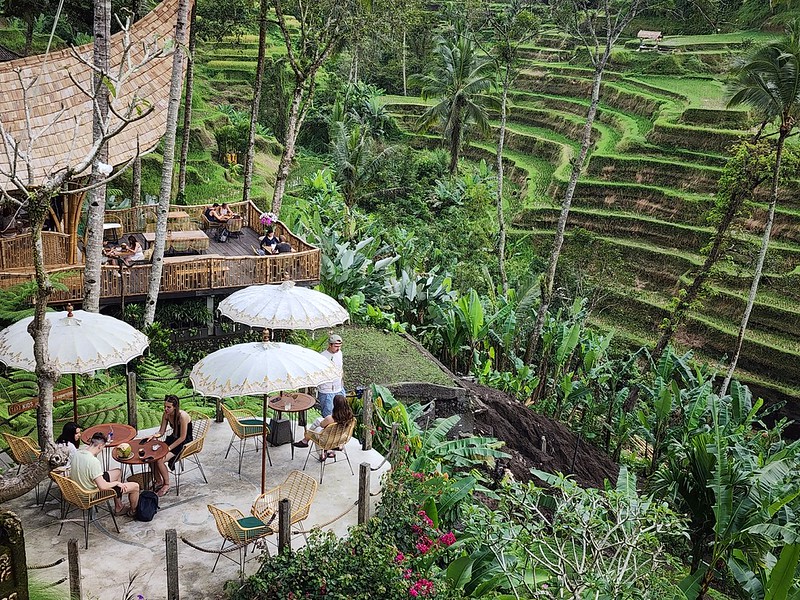
Ubud: Tegalalang Rice Terrace Photo Tour & Jungle Swing
Guided walk through Bali's famous terraced fields, with a thrilling jungle swing and photo stops.
Reserve
Carved valleys at sunrise, jungle swings above the green.
Hand-picked by our editors — only the best 5 experiences from 38 reviewed.
Verified partners for Tegalalang Rice Terrace tours, free cancellation where available, and instant confirmation on every booking.
6 hr
Guided walk through Bali's famous terraced fields, with a thrilling jungle swing and photo stops.
Reserve
9 hr
Chase three Bali waterfalls, join a holy water ritual, and stroll the Tegalalang rice terraces in one day.
Reserve
8 hr
Discover Ubud's top temples, rice terraces, and waterfalls on a full-day guided adventure across Bali.
Reserve
4 hr
Glide past UNESCO rice terraces and traditional villages on a fat-tire e-bike, capped with a Balinese lunch.
Reserve
10 hr
A full-day private Ubud adventure through two waterfalls, a sacred temple, coffee farm, and rice terraces.
ReservePrices from verified partners. Availability updates in real time at checkout. Free cancellation policies apply where shown.
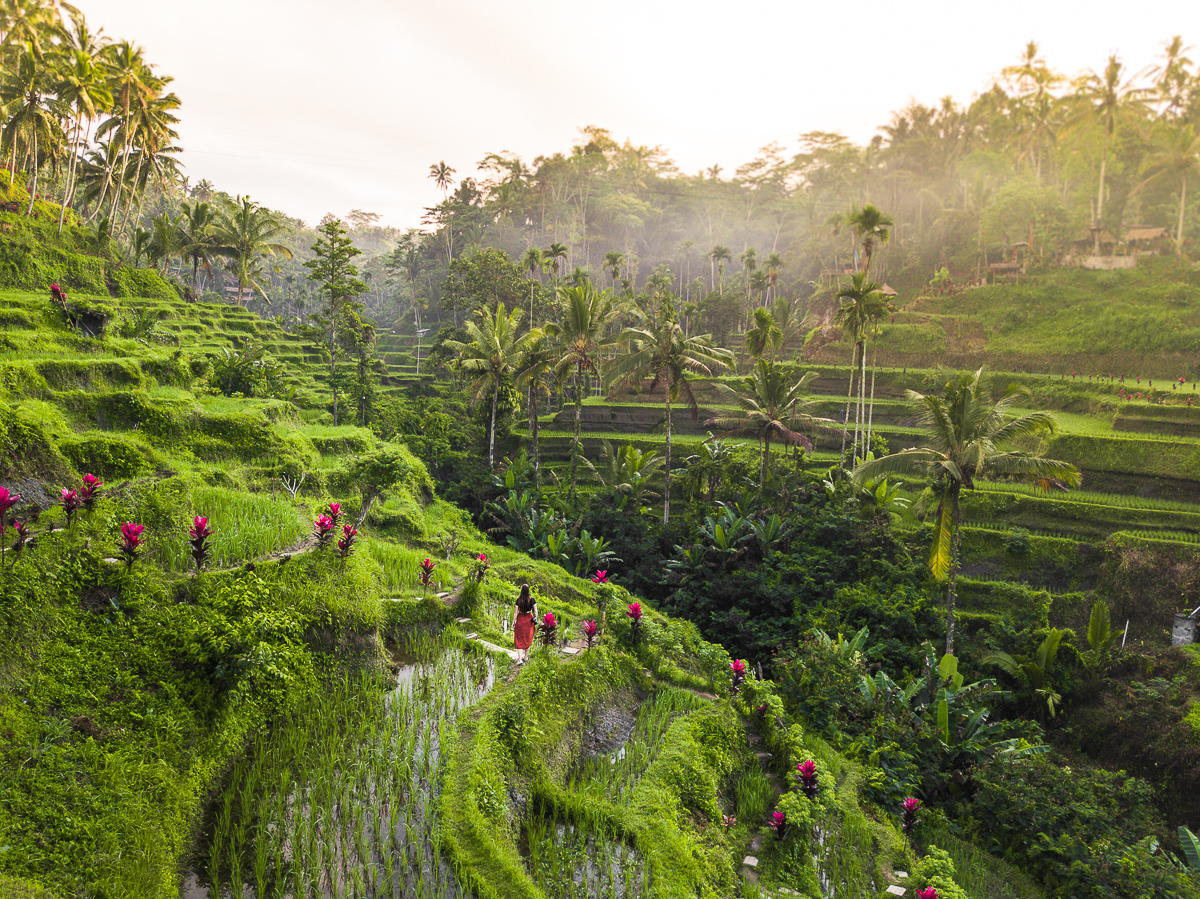
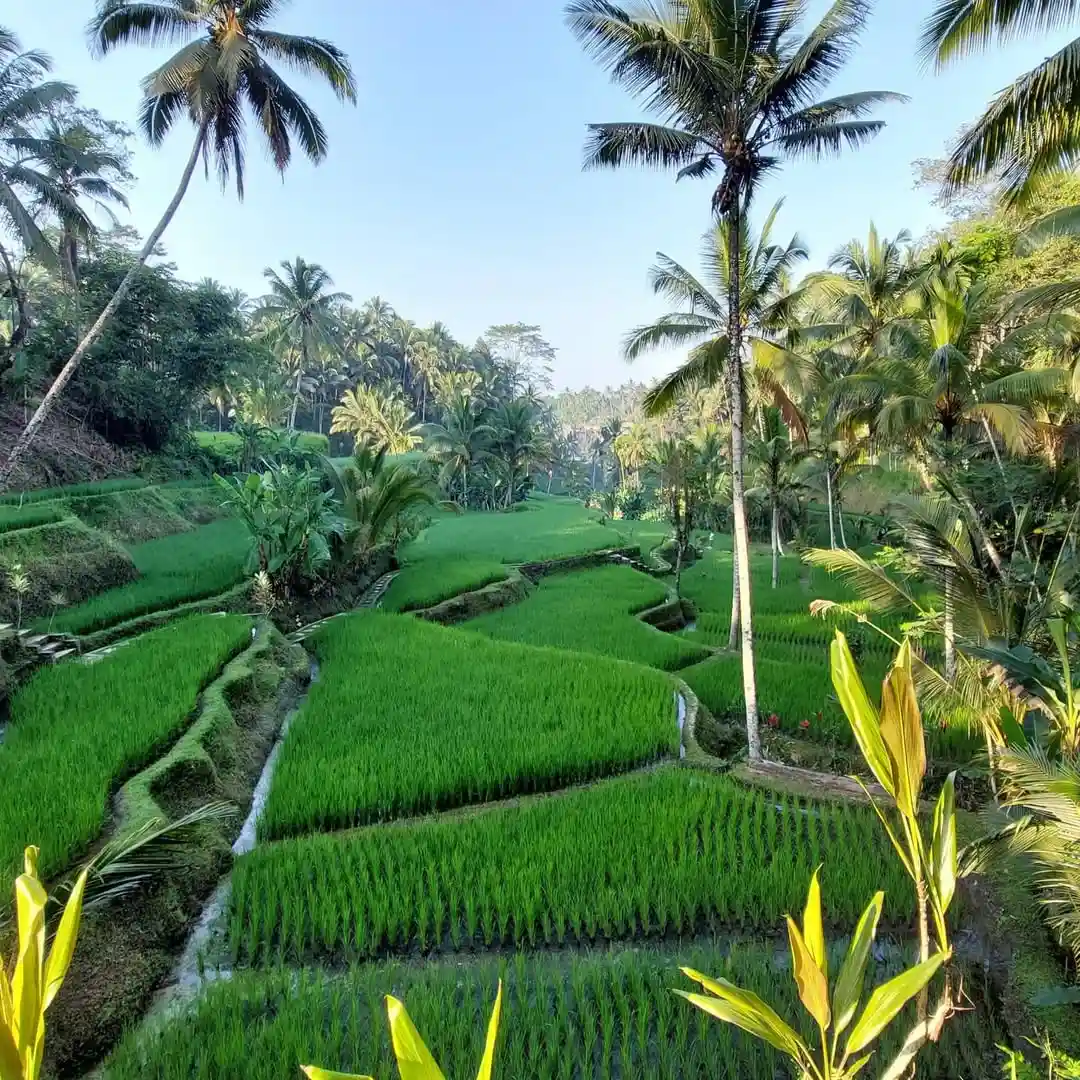
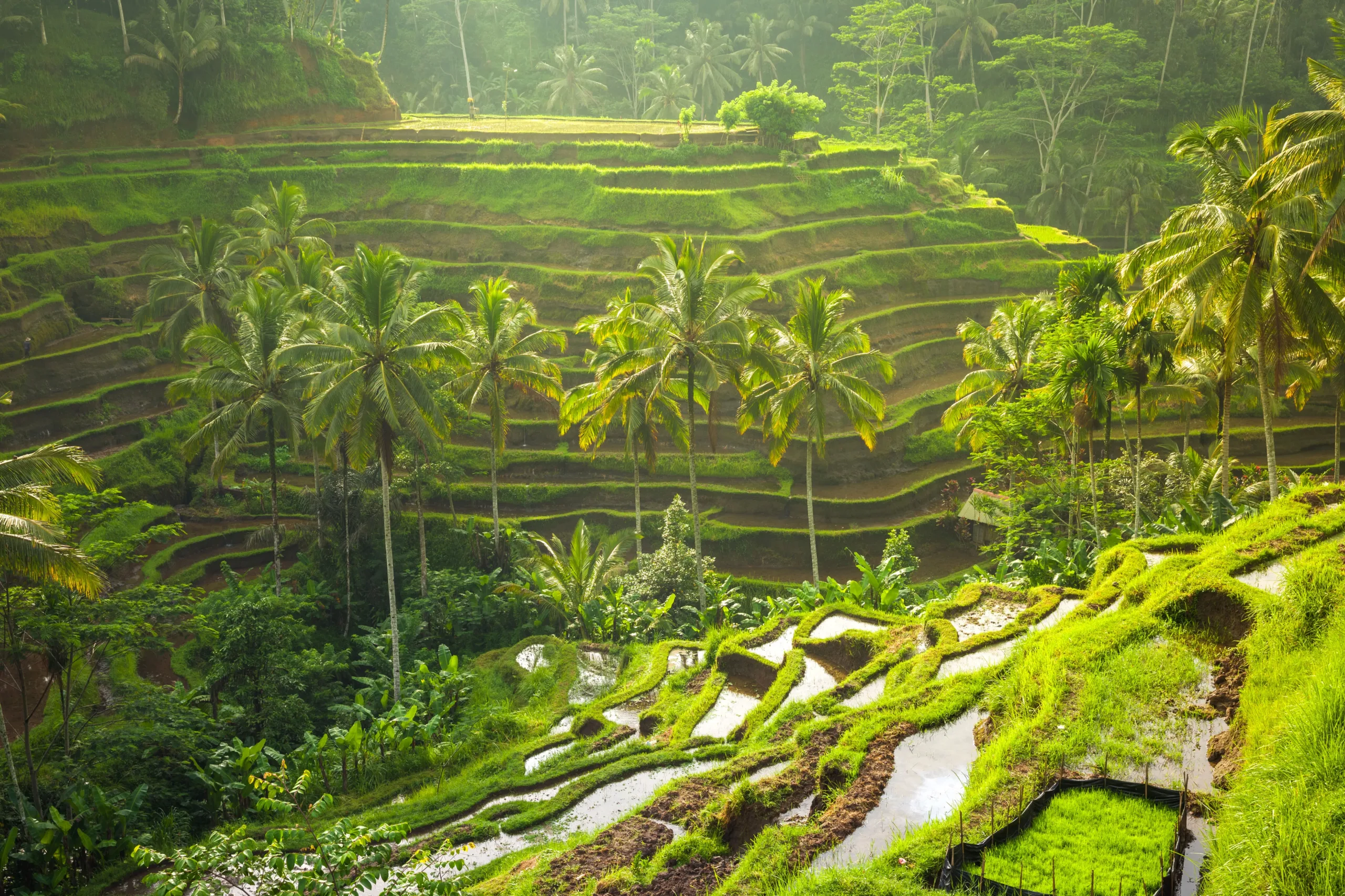
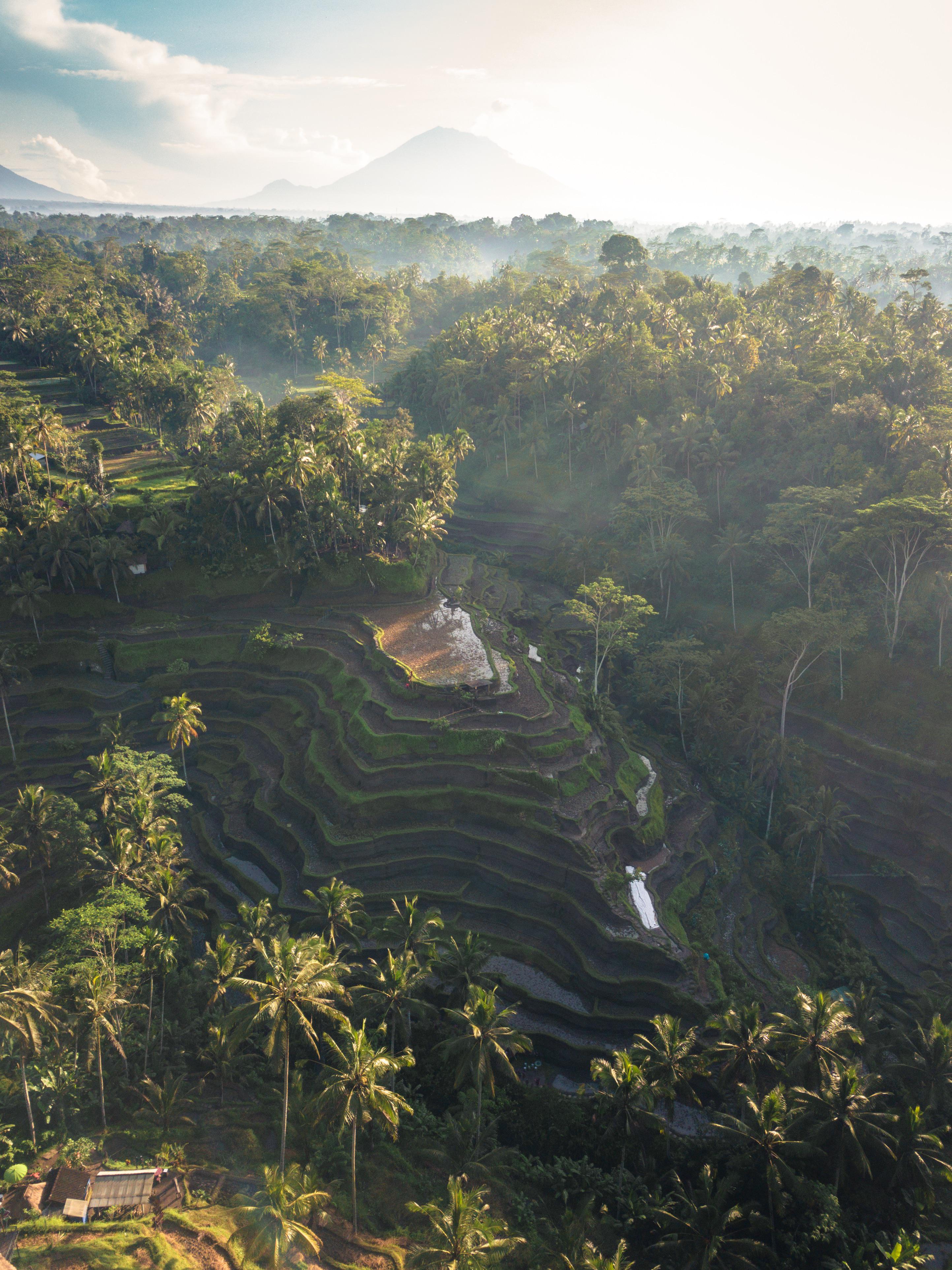
The valley you walk into is irrigated by a thousand-year-old cooperative called Subak, recognised by UNESCO in 2012 as a living cultural landscape.
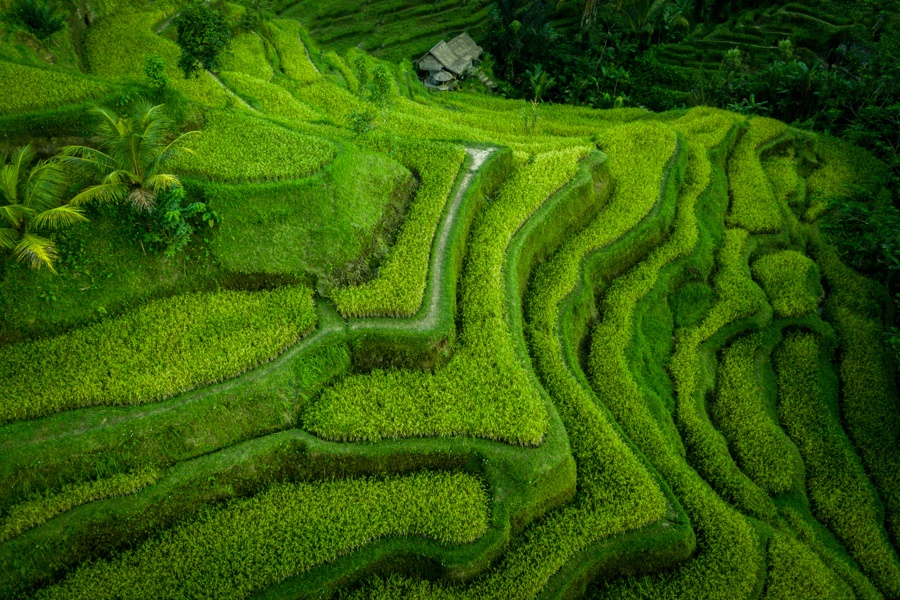
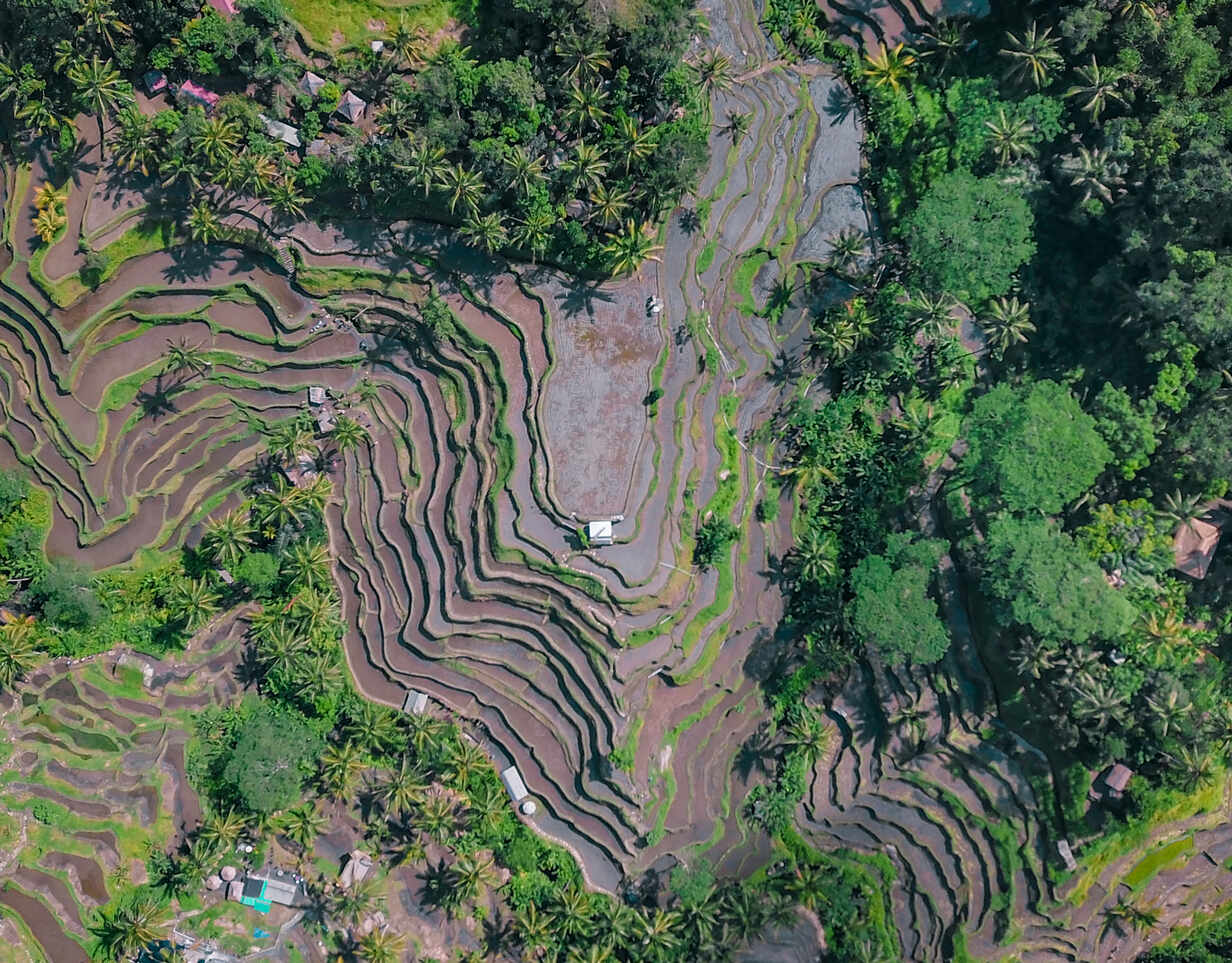
Generations of farmers in Ceking carved these contours by hand, channeling spring water from the volcanic ridge above through bamboo sluices and shared ditches, each plot fed before the next.
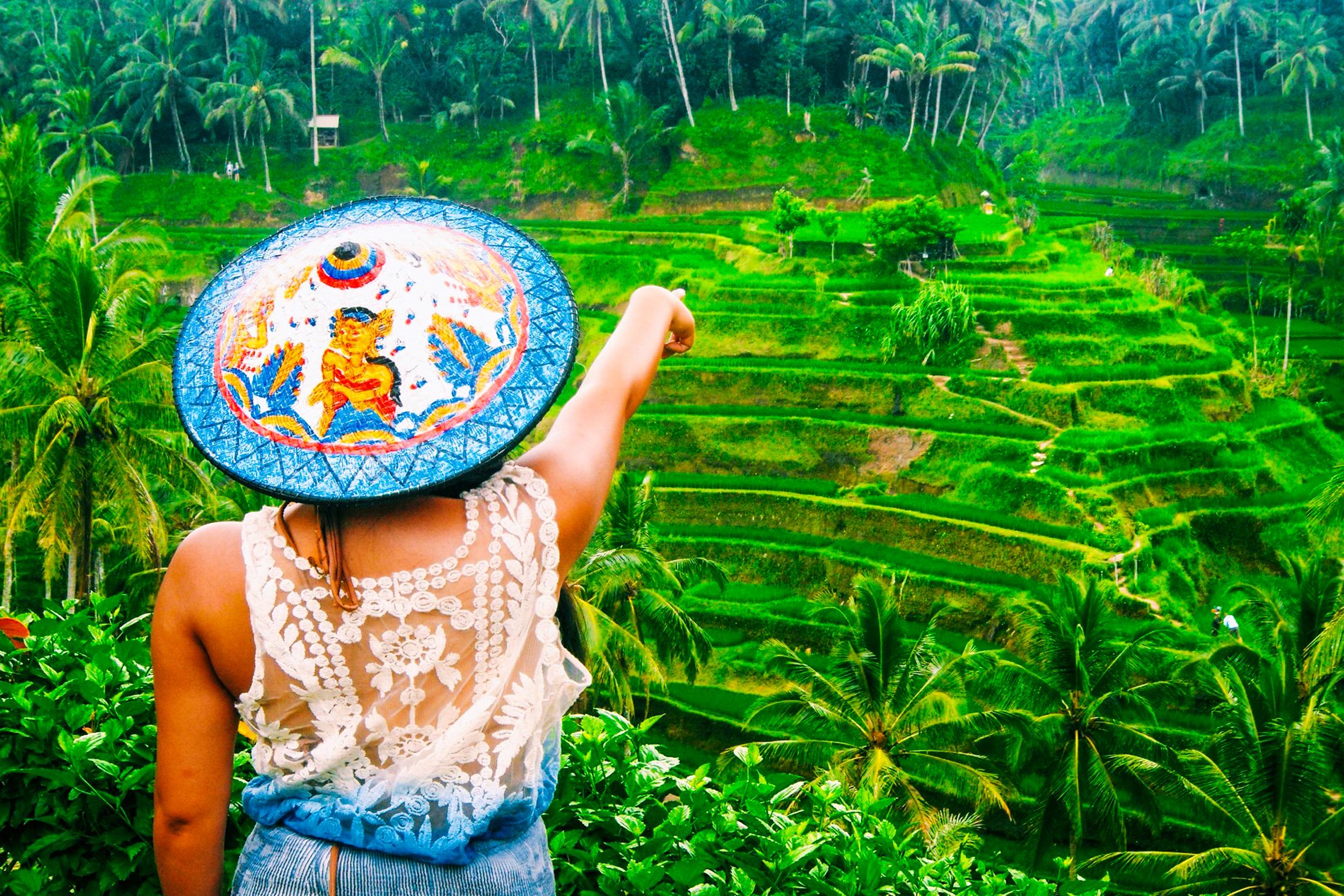
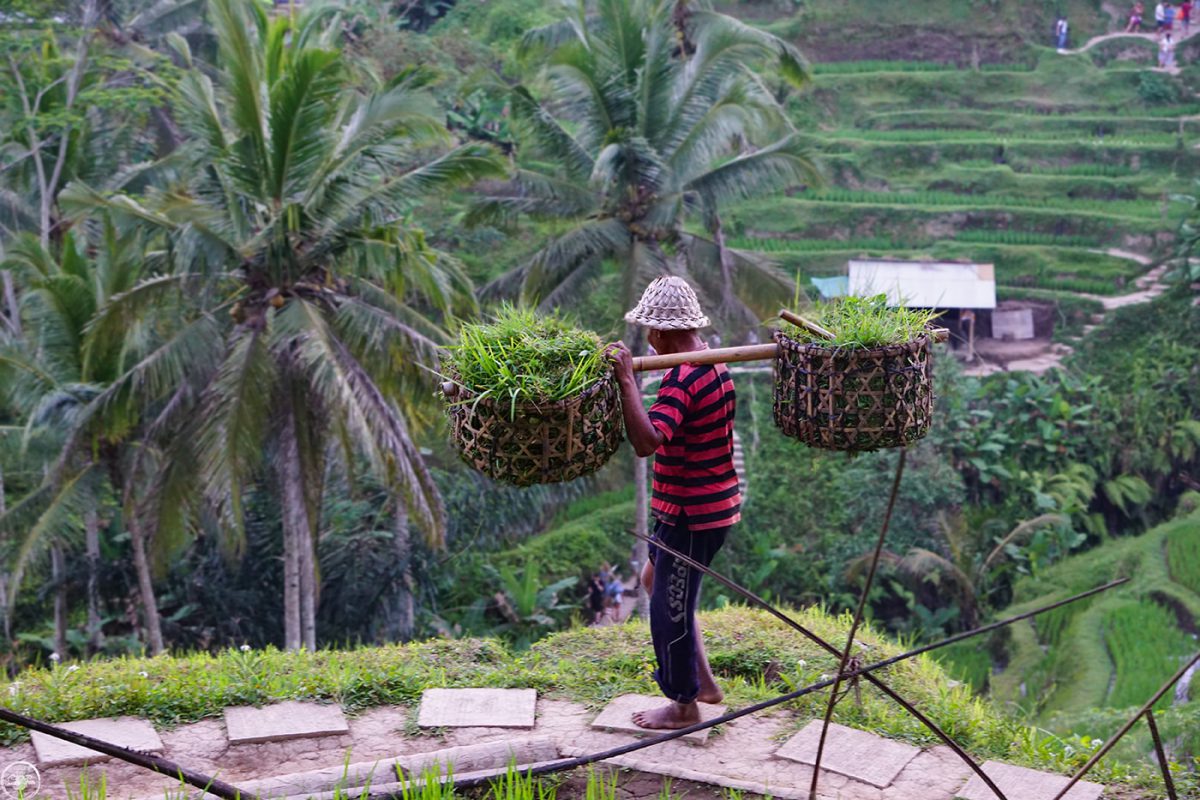
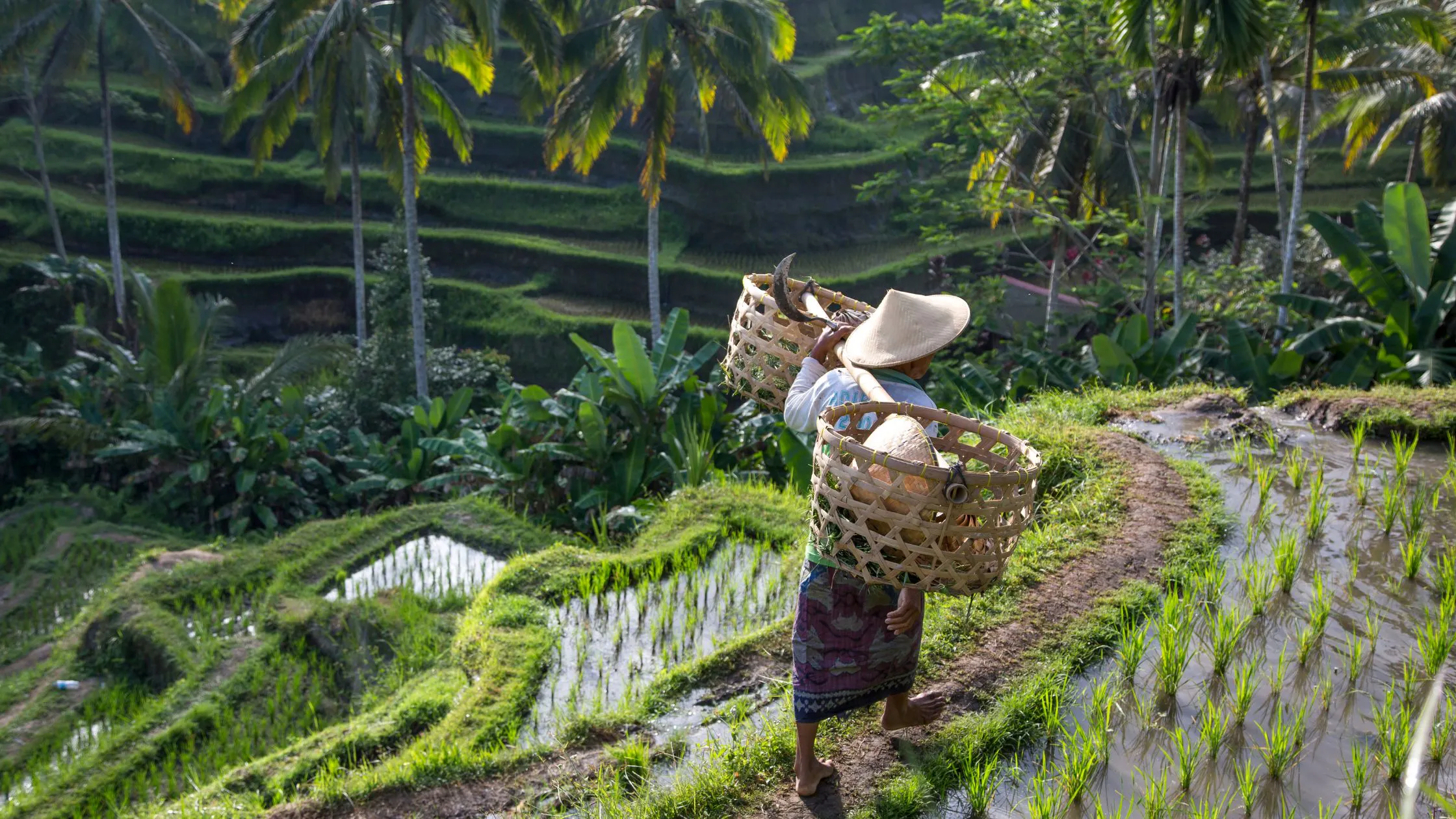
Today Tegalalang Rice Terrace remains a working paddy, not a museum. Wooden stairs descend past coconut palms to the valley floor, where farmers in conical hats still harvest by sickle between visitor footbridges. The famous Bali Swing platforms and the rice terrace swing rigs were added in 2017 along the eastern ridge, drawing a new economy that funds the upkeep of the irrigation channels themselves. Reserve tegalalang rice terrace tours that pair the Ceking viewpoints with Ubud's Tirta Empul water temple — most tegalalang rice terrace swing ticket bundles include both, and a swing tegalalang rice terrace stop sits naturally inside the loop.
"A working paddy, not a museum — every step is irrigated by a thousand-year-old cooperative called Subak."
A step-by-step walkthrough of Tegalalang Rice Terrace tickets — what you'll see, how long each stage takes, and the details that matter.
You arrive between 08:00 and 10:00, when the eastern light still rakes the contours and the tour buses are an hour out. At the entrance booth on Jalan Raya Tegallalang you pay the 25,000 IDR conservation fee, then descend the wooden stairs past the first coffee stalls.
The valley opens in three tiers; you cross a bamboo footbridge, pause where a farmer is flooding a plot, and climb the opposite ridge in roughly twenty minutes.
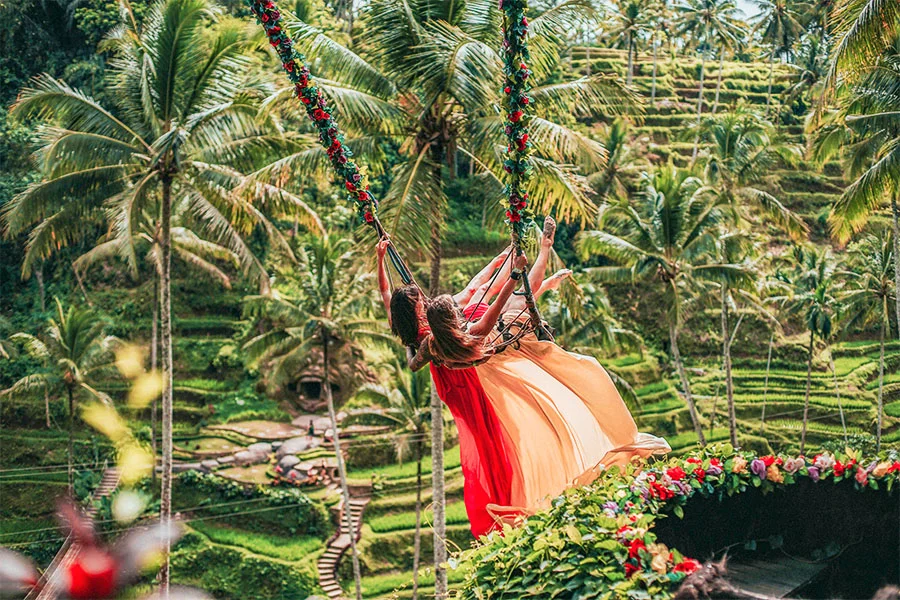
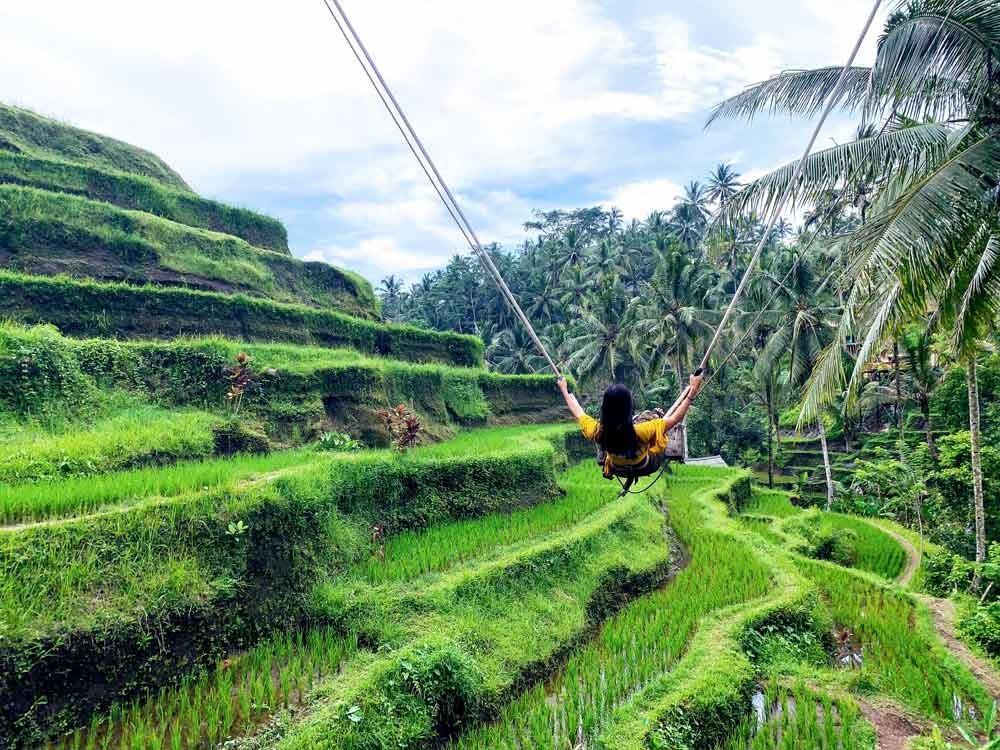
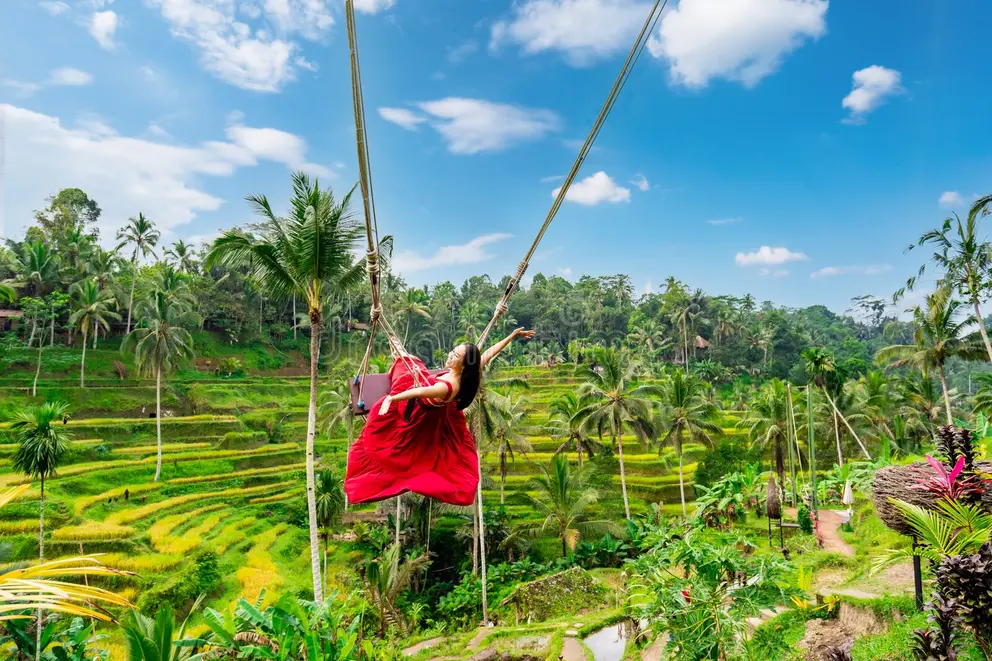
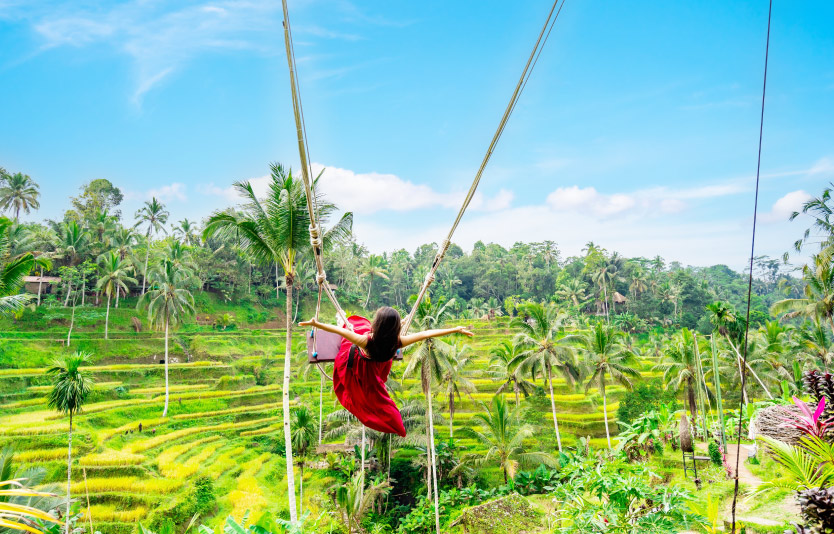
By 09:30 you are strapped into a tegalalang rice terrace swing, kicking out over the green canopy with the volcanic ridge framing the horizon. You loop back through the upper warungs for kopi luwak, then rejoin your ubud rice terrace day trip toward Tirta Empul before the midday heat lands.
The landmarks, rooms, and views travelers on Tegalalang Rice Terrace tours remember — all visible on a single visit.
The hand-dug canals and bamboo pipes of the subak system distribute mountain spring water across more than 600 metres of terraced elevation; individual farmers cannot alter water flow without communal consensus, a practice unchanged since the 9th century.
The deep valley at the heart of the terrace complex drops approximately 50 metres below the ridge road, creating a natural amphitheatre of layered paddies that faces west — giving photographers a direct angle into the late-afternoon sun.
Multiple operators line the ridge with cantilevered swing frames that project riders 10 to 15 metres out over the paddy valley; the arc at the apex reaches heights comparable to a four-storey building, making it one of the most replicated Instagram locations in Southeast Asia.
Designated lower-terrace plots close to the valley floor are used by local farming families to demonstrate traditional hand-planting and harvest techniques; the crop cycle typically runs 105 to 120 days, meaning visitors may witness planting, tillering, or harvest depending on the month.
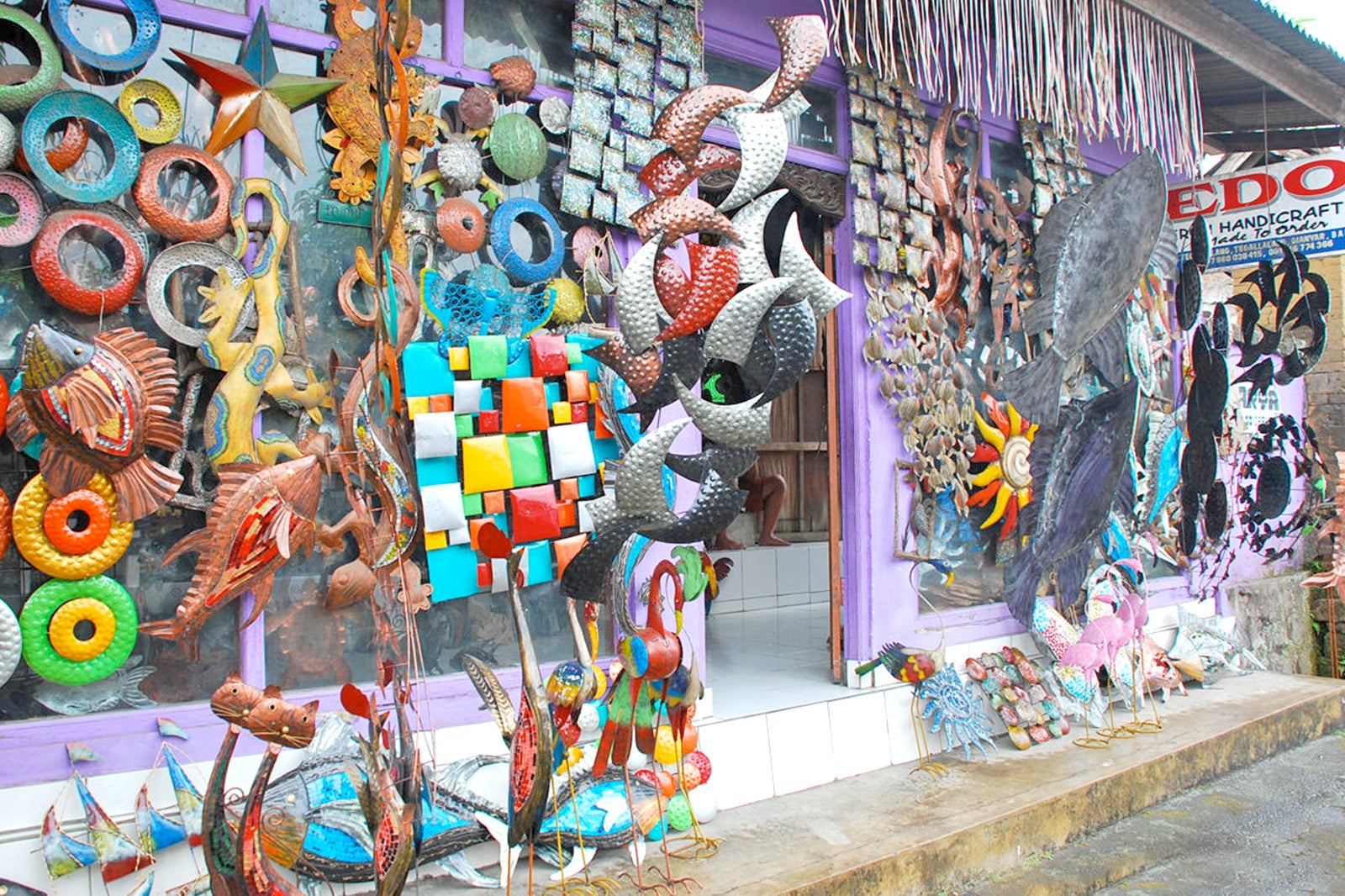
The 800-metre stretch of Jalan Raya Tegallalang immediately bordering the terrace entrance is lined with open-fronted woodcarving and rattan workshops; the area has been a centre of Balinese craft export since the 1970s and produces a significant share of Gianyar Regency's artisan goods.
Every Tegalalang Rice Terrace tour side-by-side — duration, what's included, how you redeem.
| Experience | From | Duration | Transfers | Pickup | Lunch | Tax inc. | Free cancel. | Price | |
|---|---|---|---|---|---|---|---|---|---|
|
Skip-the-line Most popular
Ubud: Tegalalang Rice Terrace Photo Tour & Jungle Swing
|
— | 6 hr | — | — | — | — | ✓ | €19 | Book → |
|
Guided Experience
Ubud Day Trip: Waterfalls, Tirta Empul Temple & Rice Terrace
|
— | 9 hr | — | — | — | — | ✓ | €21 | Book → |
|
Standard Entry
Ubud Highlights: Full-Day All-Inclusive Tour with Optional Lunch
|
— | 8 hr | — | — | — | — | ✓ | €27 | Book → |
|
Premium Combo
Ubud Rice Terraces & Villages Half-Day E-Bike Tour
|
— | 4 hr | — | — | — | — | ✓ | €27 | Book → |
|
Luxury / Private
Ubud Private Day Tour: Waterfalls, Water Temple & Rice Terraces
|
— | 10 hr | — | — | — | — | ✓ | €60 | Book → |
All prices from verified partners. Availability and exact terms confirmed at checkout.
Choose your ticket, select your date, and reserve in under two minutes. Secure checkout handled by our verified partner.
Instant confirmation by email, with a mobile voucher you can save offline. No printing, no queuing at a collection desk.
Arrive at the entrance, show your voucher on your phone, and walk in. Most tickets include priority or skip-the-line access.
Practical details for Tegalalang Rice Terrace tickets straight from our verified partners — hours, access, rules, and how to get there.
Jalan Raya Tegallalang, Tegallalang, Gianyar Regency, Bali 80561
Large parking area adjacent; look for the green conservation fee signage
Open in Google MapsHire a private driver from Ubud for a round trip; most drivers charge 300,000–500,000 IDR for a half-day including waiting time.
Rent a scooter in Ubud (70,000–100,000 IDR/day) and ride north on Jalan Raya Ubud then Jalan Raya Tegallalang; parking on site is free.
Grab or Gojek from Ubud center costs approximately 30,000–50,000 IDR one-way; note that return ride-hail pickups may be restricted near the terraces.
Joining a full-day Ubud tegalalang rice terrace tour from south Bali resorts typically includes hotel pick-up, driver, and guide.
Light, breathable clothing is recommended given Bali's equatorial heat, but shoulders and knees should be covered if you plan to enter any roadside shrines or small temples within the terrace complex. Sarongs are sometimes available for loan or purchase at local stalls near the main entrance. Sturdy closed-toe shoes or sandals with ankle support are strongly preferred over flip-flops, as the clay paths become slippery during and after rain.
There are no formal bag-check or security screening facilities at tegalalang rice terrace. Visitors carry their own belongings throughout the terraced paths. Keep valuables such as passports and phones in a zipped bag or money belt, as the narrow trails can get crowded and pickpocketing, while rare, has been reported. Large backpacks and rolling luggage are impractical on the steep, narrow footpaths.
Photography is freely permitted throughout the terraces and is a primary reason most visitors come to the Ceking rice terrace area. A number of pay-to-use photo platforms, bamboo bridges, and Bali swing installations (priced separately from the entrance fee, typically 175,000–450,000 IDR) are positioned along the ridge for dramatic shots over the paddies. Drone flights require prior permit from Indonesia's Civil Aviation Authority (DGCA) and are not permitted without authorisation; local operators can sometimes arrange this.
Tegalalang rice terrace presents significant accessibility challenges. The main valley trails involve steep stone stairways, uneven earth paths, and narrow bamboo bridges with no handrails in sections. Wheelchair access is not possible on most trail routes. Visitors with limited mobility can view the terraces from ridge-level cafes and restaurants that line Jalan Raya Tegallalang without descending into the valley. No formal accessibility infrastructure such as ramps or lifts is present at this outdoor agricultural site.
Mobile signal on the main ridge road is generally strong on major Indonesian networks (Telkomsel, XL, Indosat). Signal weakens in the deeper valley sections. Most ridge cafes offer free Wi-Fi for customers. Bring a portable charger as there are no public charging stations along the terrace paths. Photography apps and GPS navigation work well from the ridge; offline maps are useful if you descend into less-visited paddy sections.
Tegalalang rice terrace tours with children are popular and generally suitable for kids aged six and above who are comfortable with uneven terrain. Parents should supervise children closely on steep sections and near swing platforms. Younger children may find the heat and uneven paths tiring, so bring snacks, water, and a carrier or pram-friendly path is not available. The Bali swings and sky bike activities carry age and weight restrictions set by individual operators; confirm these on arrival. Several ridge-top cafes with shaded seating make good rest stops for families.
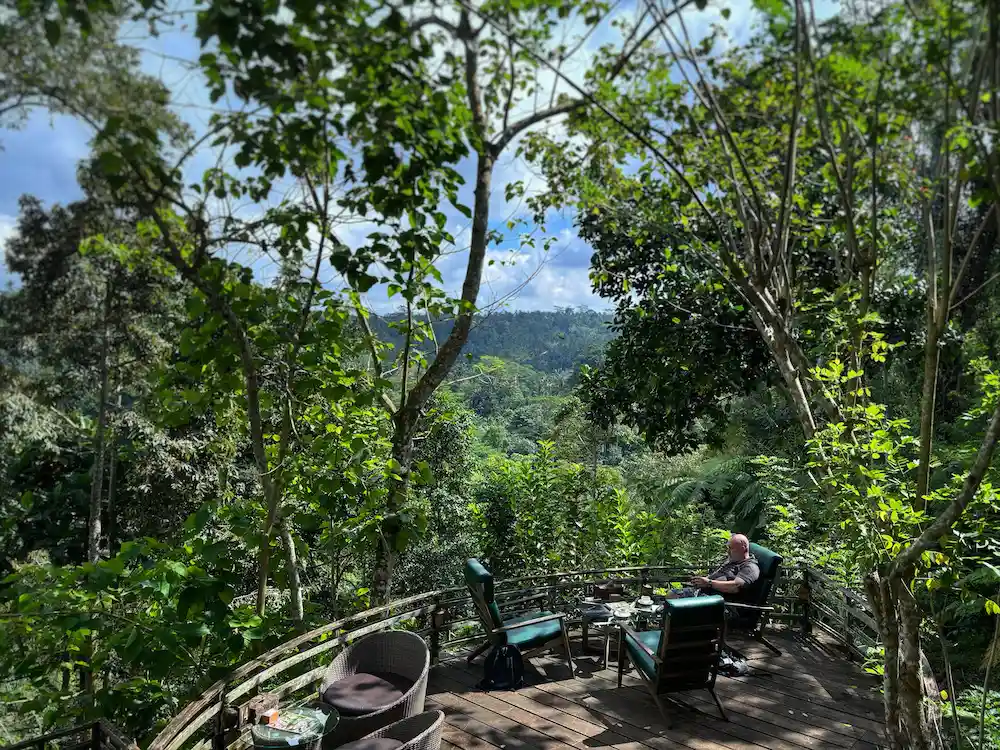
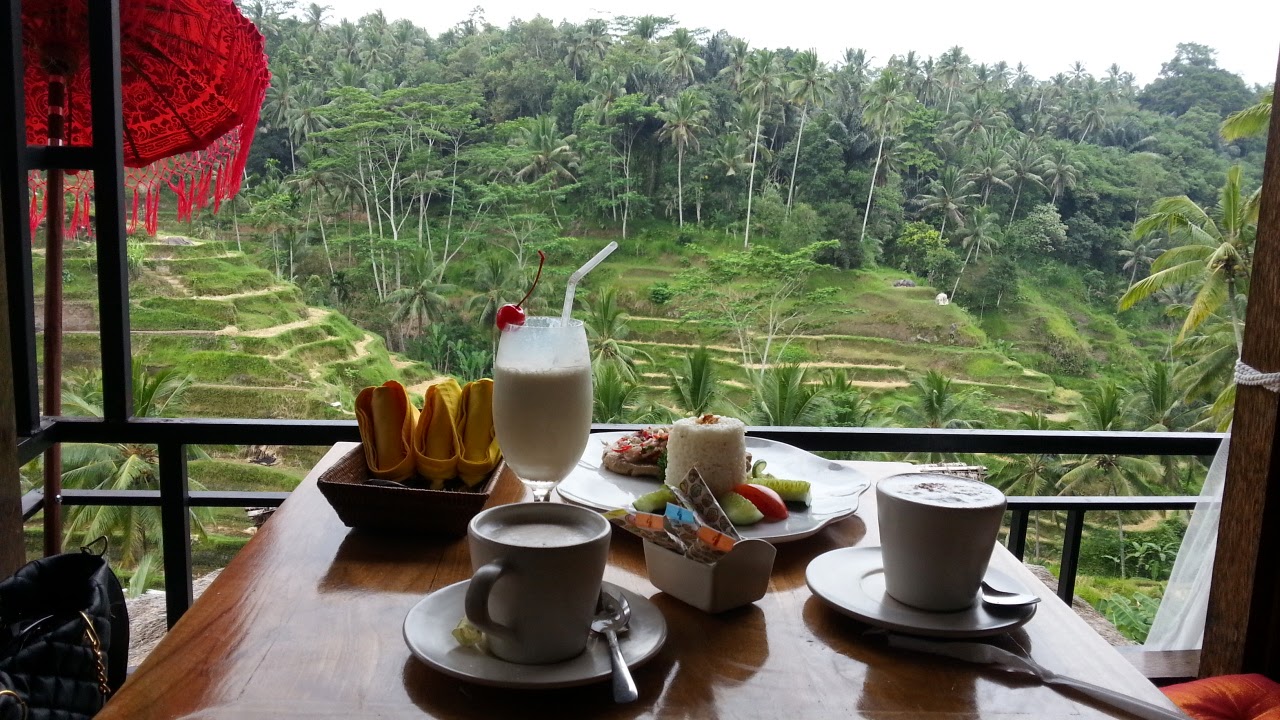
Numerous warungs (small local eateries) and mid-range restaurants with panoramic views of the rice paddies line the ridge road above the terraces. Expect nasi goreng, mie goreng, fresh coconuts, smoothie bowls, and Luwak (civet) coffee tastings at nearby Bali Pulina plantation and similar cafes. Prices are higher than Ubud town given the tourist footfall, typically 50,000–120,000 IDR for a main dish. No food or drink may be carried into working paddy sections, and eating on active crop terraces is discouraged out of respect for local farmers.
Pets are not permitted on the main terrace walking trails at tegalalang rice terrace, both out of respect for the working agricultural environment and to avoid disturbing local livestock. Service animals may be accommodated on a case-by-case basis; check with the entrance booth staff on arrival. There are no pet-friendly facilities such as water stations or rest areas on site.
The subak irrigation system underpinning tegalalang rice terrace was inscribed on the UNESCO World Heritage List in 2012 as part of the Cultural Landscape of Bali. Visitors are asked to stay on marked paths and refrain from entering fenced paddy plots, as the fields are actively farmed and any damage to crops directly affects local livelihoods. Small donation boxes maintained by individual farming families are placed at various trail junctions; contributions of 10,000–20,000 IDR per person are customary and go directly to terrace upkeep.
Jalan Raya Tegallalang, Tegallalang, Gianyar Regency, Bali 80561
Large parking area adjacent; look for the green conservation fee signage
Get directions
Jalan Raya Tegallalang (central ridge section)
Popular secondary entry point with café facilities and swing operators on site
Get directionsBest time to go, insider tips, nearby landmarks, and the cancellation fine print — flip through to skim what matters to you.
How crowds, weather, and events shift across the year.
Clear skies and firm paths make this the easiest time to walk the terraces; expect higher visitor numbers, particularly July–August.
Fields are at peak green after late-wet or early-dry rains, offering the richest color for photography with moderate crowd levels.
Afternoon showers keep visitor numbers lower and terraces vivid green; paths become slippery, so waterproof footwear is essential.
Late dry-season onset with good visibility and shoulder-season crowd levels; mornings are clear and relatively cool before noon.
Small details that turn a good visit into a great one.
Gates open at 08:00; arriving between 08:00 and 10:00 gives you the softest morning light for photos and significantly smaller crowds before organised tour groups descend around 10:30.
The 25,000 IDR conservation fee covers general terrace access; decline any unofficial secondary 'fees' on the path unless you are using a specific paid swing, bridge, or photo platform.
Entering near Uma Ceking or through the northern side of the ridge avoids the busiest section of the main entrance and puts you among quieter paddy sections.
There is no ATM within the terrace complex; the nearest ATMs are in Tegallalang village, roughly 1 km away. Donation boxes and stall vendors rarely carry change for large notes.
The terraces are a working UNESCO-linked agricultural landscape, not a theme park; remain on marked paths, do not climb over fencing, and ask before photographing individual farmers at close range.
Pairing tegalalang rice terrace with a Tirta Empul or Gunung Kawi temple visit before noon makes for an efficient half-day cultural circuit without excessive backtracking.
Non-bookable sights within a short walk — free to visit, easy to pair.
Working plantation offering Luwak coffee tastings and terrace views just north of the main terrace area.
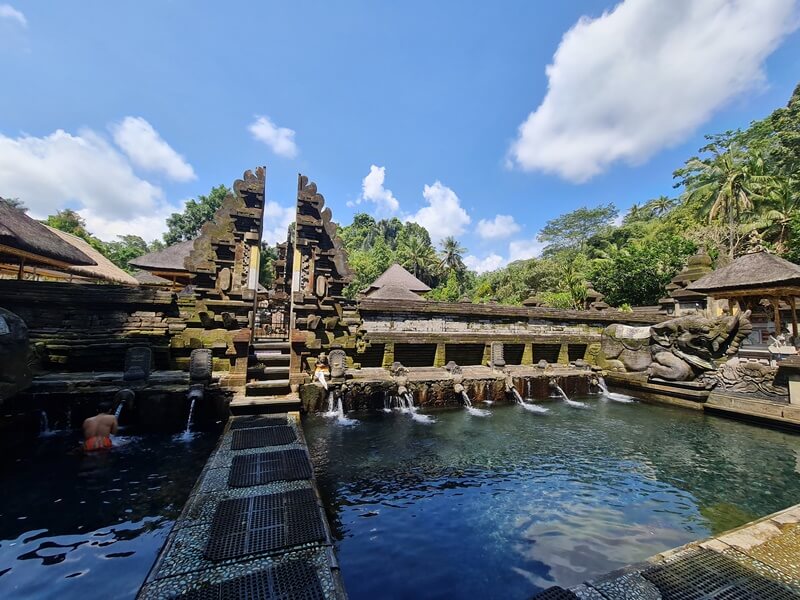
Sacred Hindu water temple in Tampaksiring with holy spring pools used for ritual purification; one of Bali's most visited religious sites.
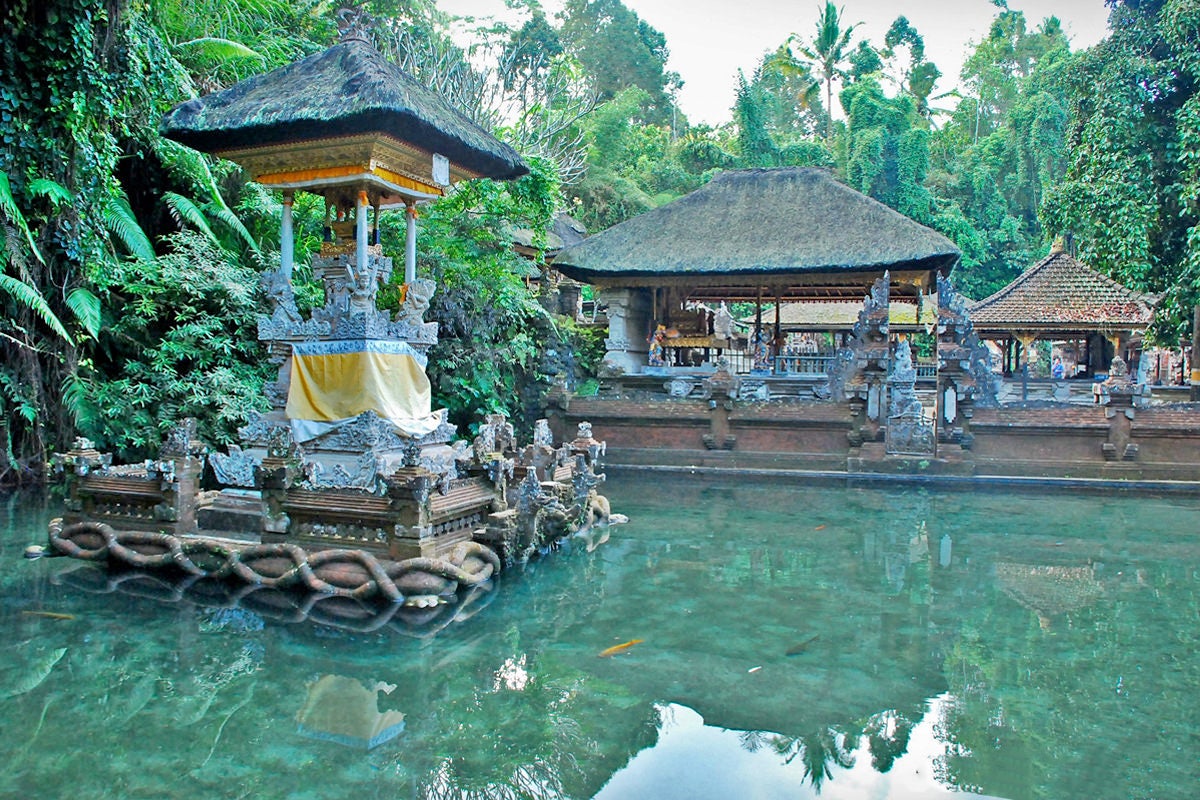
11th-century rock-cut temple complex set in a forested river valley, featuring carved stone shrines and natural spring pools.
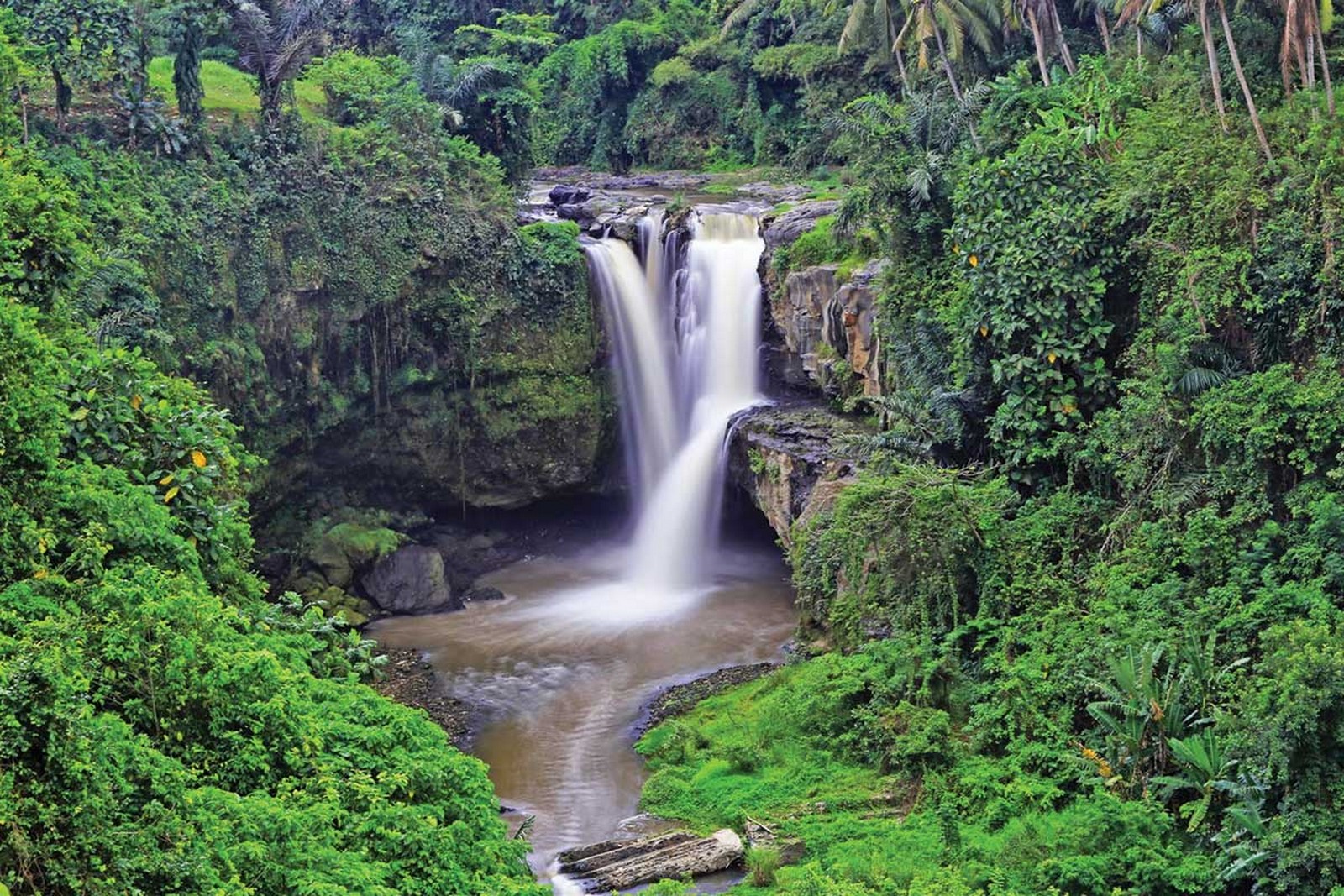
Accessible jungle waterfall south of Ubud with swimming pools at the base; frequently combined with tegalalang rice terrace on day tours.
Road-side strip of woodcarving galleries and artisan shops selling Balinese furniture, rattan goods, and sculptures at negotiable prices.
Flexible, no hidden fees.
The 25,000 IDR conservation fee is collected on-site at the entrance booth and is non-refundable once paid. For third-party guided tegalalang rice terrace tours booked through operators, free cancellation is typically available up to 24 hours before the scheduled departure, with no refund issued for cancellations made within 24 hours.
Hand-picked options within walking distance — pick a district for vibe, or a specific hotel for convenience.
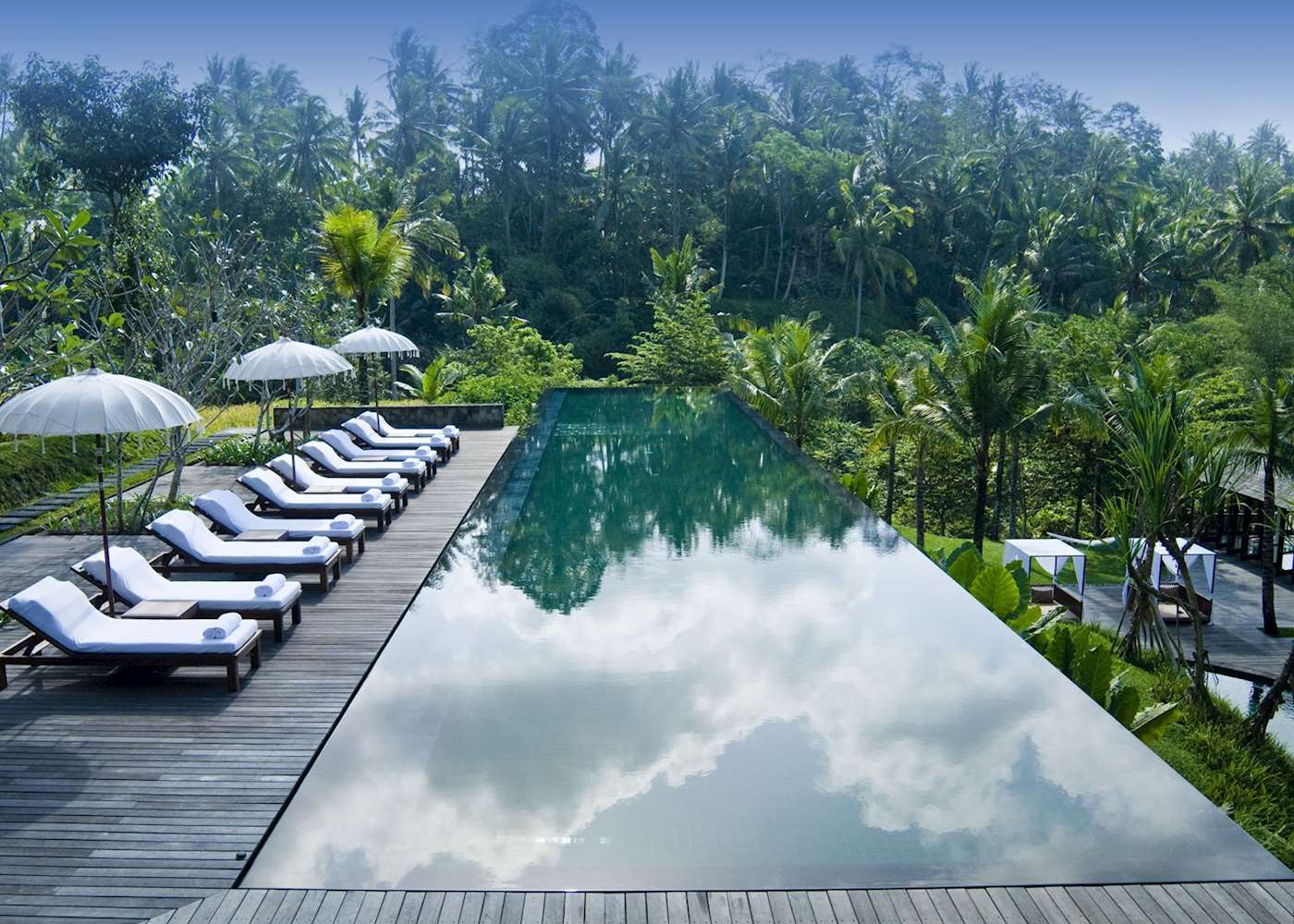
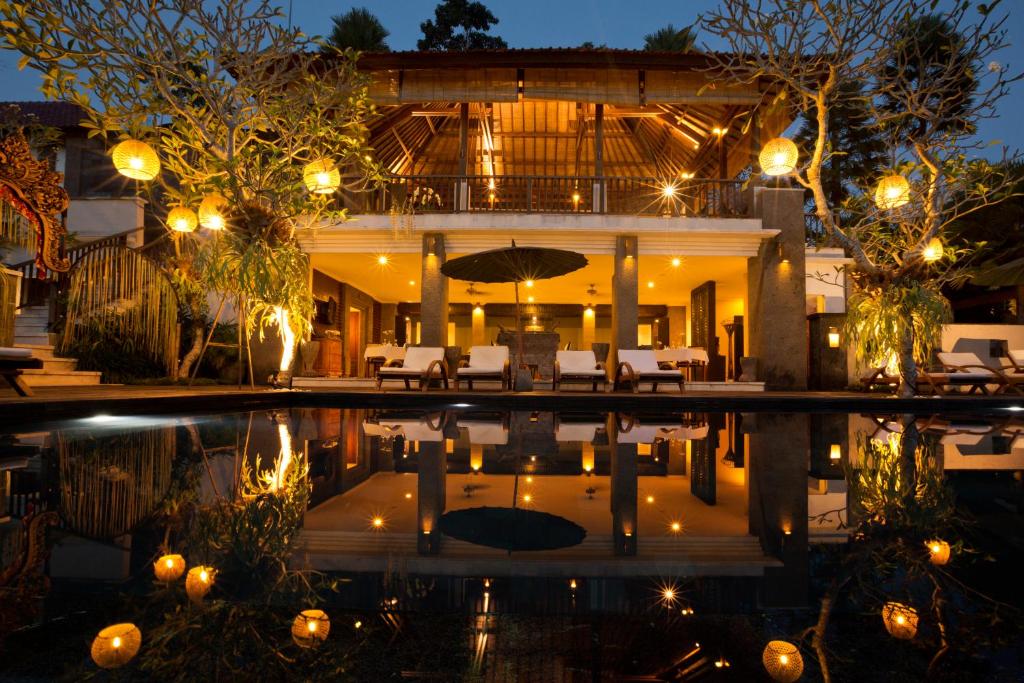
Cliff-edge resort in Ubud with valley views, infinity pool, and Balinese spa.
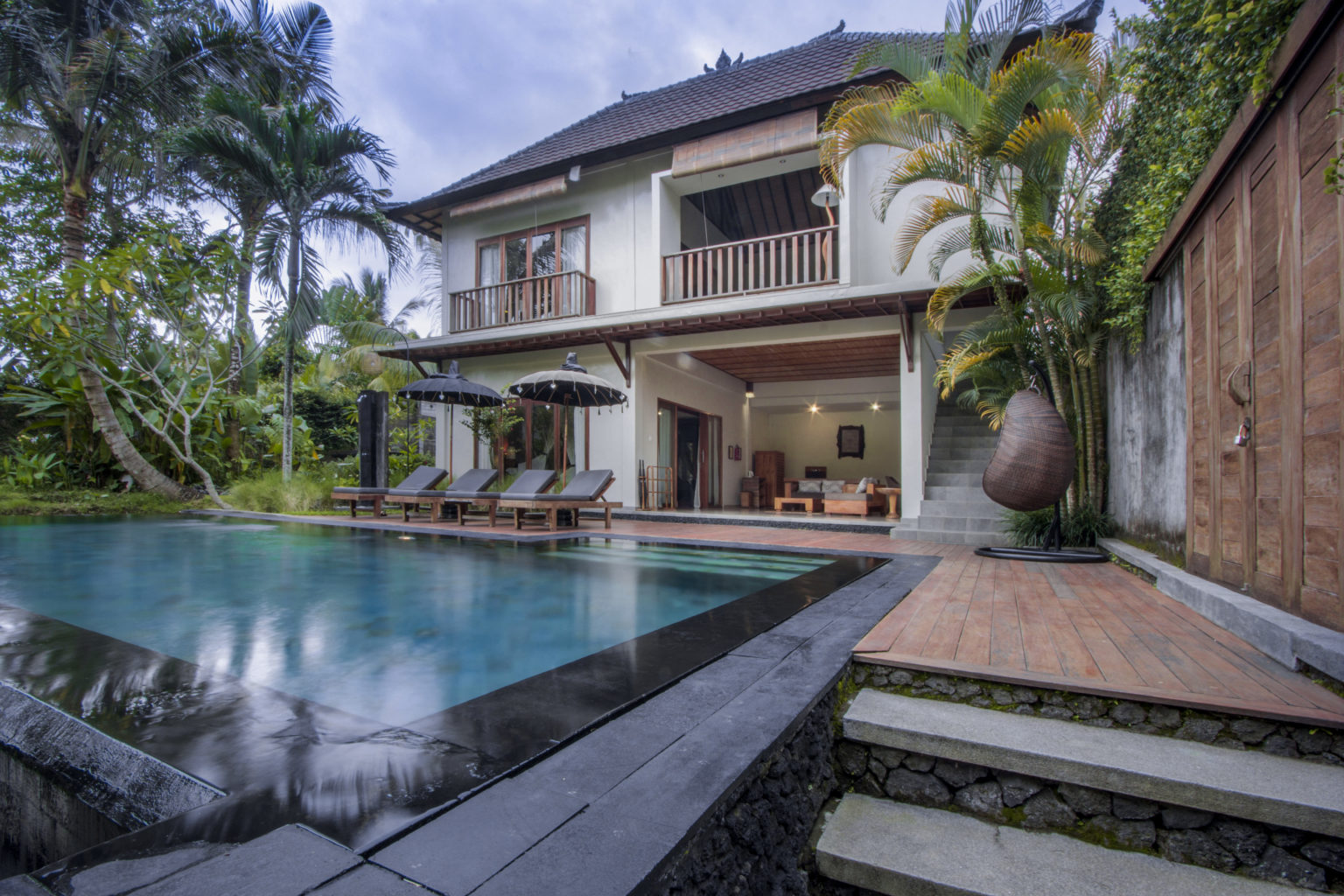
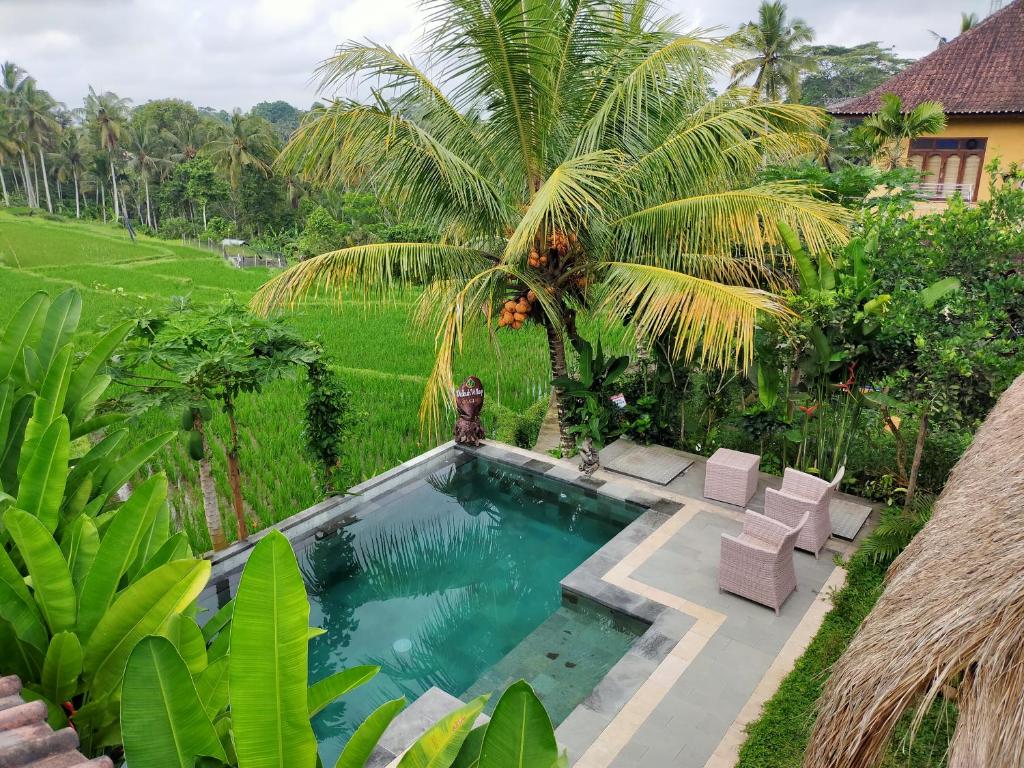
Boutique hillside property close to the terraces with rice-field vista rooms and an outdoor pool.
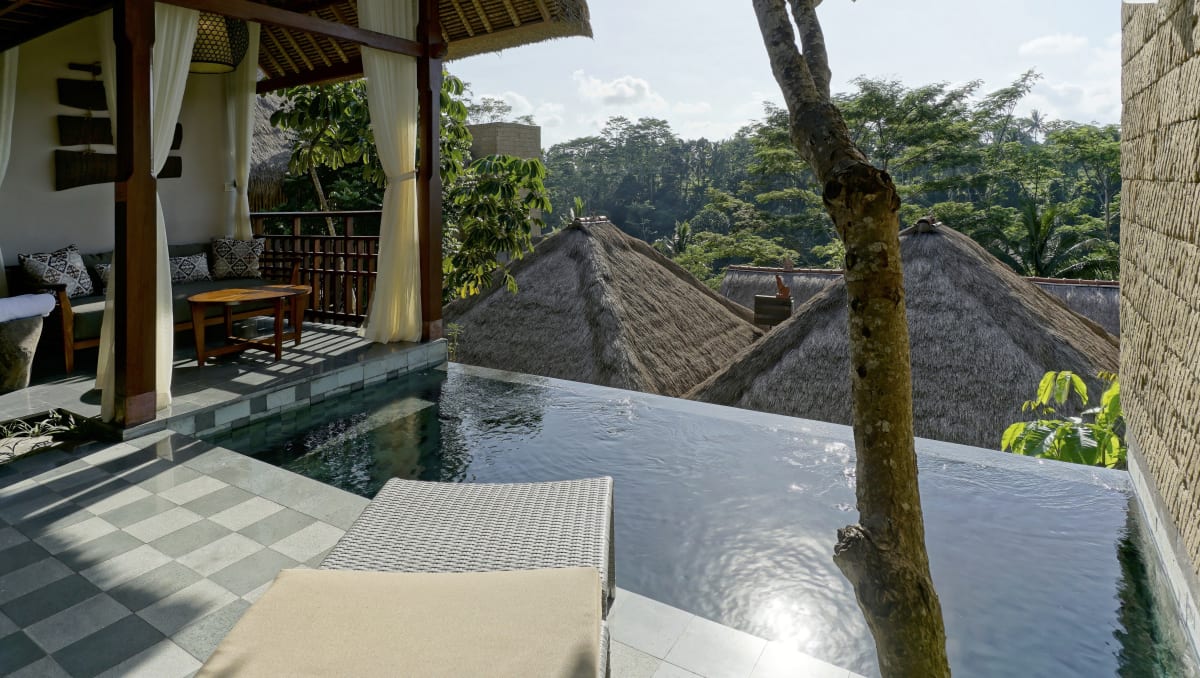
Jungle-set villas alongside a river north of Ubud with traditional Balinese pavilion architecture.
Riverside boutique hotel in central Ubud offering well-priced private-pool villas.
Several family-run homestays and small guesthouses along Jalan Raya Tegallalang offer simple rooms from approximately 200,000–400,000 IDR per night.
Tegalalang rice terrace is open every day of the week from 08:00 to 19:00, including weekends and public holidays. No advance booking is required; simply pay the conservation fee at the entrance booth on arrival.
The mandatory conservation fee at tegalalang rice terrace is 25,000 IDR per person, paid in cash at the entrance booth. Additional optional charges apply for swings, sky bike rides, ziplines, and certain photo platforms, which are priced and paid separately by individual operators.
The best time to visit tegalalang rice terrace is between 08:00 and 10:00, when morning light is soft, temperatures are cooler, and tour buses have not yet arrived. Arriving at opening time at 08:00 is ideal for an undisturbed experience.
The Ubud rice terrace landscape involves steep stone stairways, narrow earth paths, and uneven bamboo bridges, making it unsuitable for wheelchairs or visitors with significant mobility limitations. Those with limited mobility can enjoy aerial views of the terraces from the ridge-level cafes and restaurants lining Jalan Raya Tegallalang without descending.
Light, breathable clothing covering shoulders and knees is recommended at the Sawah Terasering Tegalalang, particularly if you plan to enter nearby roadside shrines. Closed-toe shoes or sandals with ankle support are strongly preferred, as paths become slippery when wet.
Photography is freely permitted throughout the terraces and is actively encouraged. Drone use requires a prior permit from Indonesia's Directorate General of Civil Aviation (DGCA); flying without authorisation is not permitted at this site or elsewhere in Bali.
A wide selection of warungs and ridge-top restaurants lines Jalan Raya Tegallalang, serving Indonesian staples, fresh coconuts, smoothie bowls, and Luwak coffee. Eating on the active paddy terraces themselves is discouraged out of respect for the farming community.
The most convenient options are hiring a private driver from Ubud (300,000–500,000 IDR round trip, approximately 20–30 minutes) or renting a scooter. Grab and Gojek can take you to the terraces for around 30,000–50,000 IDR one-way, but return ride-hail pickups may be restricted near the site. No direct public bus route serves tegalalang rice terrace.
A tegalalang rice terrace tour with children is generally suitable for kids aged six and above who can manage uneven paths. Parents should supervise closely near swing platforms and steep valley sections. Ridge-top cafes with shaded seating provide good rest stops, and the terraces' visual drama tends to engage older children effectively.
The 25,000 IDR conservation fee paid at the gate is non-refundable. For guided tegalalang rice terrace tours booked through third-party operators, free cancellation is typically available up to 24 hours before the tour start time; cancellations inside that window generally receive no refund.
The closest landmarks include Bali Pulina coffee plantation (5 min drive), Gunung Kawi Sebatu Temple (10 min drive), Tirta Empul Temple (15 min drive), and Tegenungan Waterfall (25 min drive). Many visitors combine these into a single half-day Ubud tegalalang rice terrace tour circuit.
The subak cooperative irrigation system that sustains tegalalang rice terrace was inscribed on the UNESCO World Heritage List in 2012 as part of the Cultural Landscape of Bali. The designation recognises the subak's integration of Balinese spiritual philosophy — Tri Hita Karana, meaning harmony among people, nature, and the divine — with functional water management that has sustained rice farming since at least the 9th century.